
Medieval beginnings
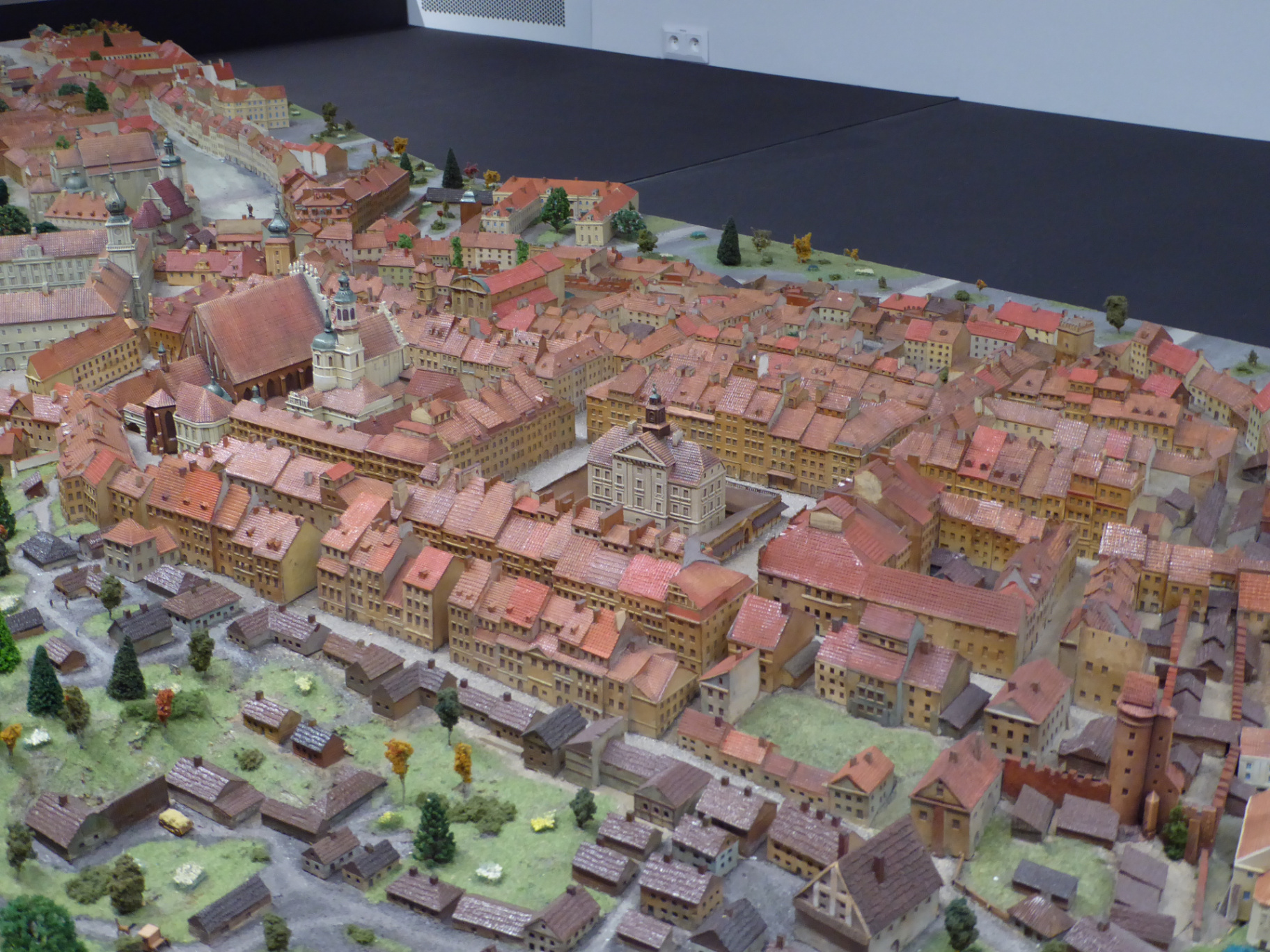
The square was laid out around 1300 in a regular rectangular form, following the principles of a town charter under Chełmno law. Measuring approximately 90 × 73 metres, it served from the outset as a marketplace and meeting place of the town council.
A masonry town hall stood in the centre by the fifteenth century at the latest, accompanied by a pillory, municipal scales and a well. The square was initially surrounded by wooden houses and later by narrow multi-storey masonry townhouses with richly decorated façades.
The golden age and Canaletto
From the sixteenth to the eighteenth century, the square was the bustling commercial centre of the capital of the Polish–Lithuanian Commonwealth. Merchants from Gdańsk, Toruń, Kraków and German cities kept stores of cloth, spices and wine here. The richest burghers, including the Baryczka, Fukier and Giese families, lived in the surrounding houses.
Bernardo Bellotto, known as Canaletto, recorded the appearance of the square in the 1770s. His precise vedute later became one of the sources used for post-war reconstruction.
In 1817, during the period of the partitions, the damaged town hall was demolished. The centre of the square remained open until 1855, when Konstanty Hegel’s cast-iron Mermaid was erected there as a symbol of the city.
Destruction in 1944 and reconstruction
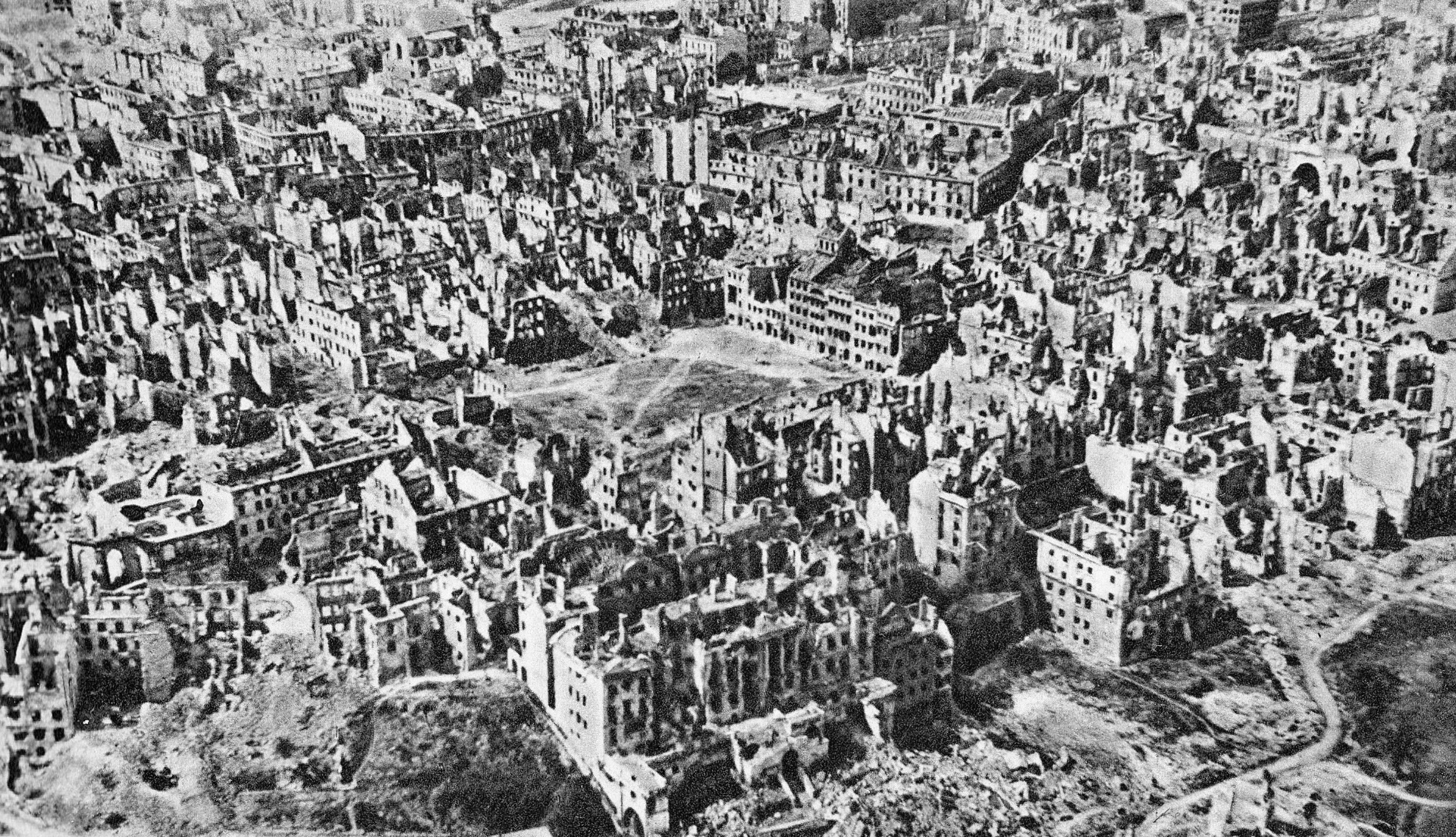
Under German occupation, the square first suffered in September 1939, but the Warsaw Uprising brought catastrophe. After the uprising was suppressed in the autumn of 1944, German Verbrennungskommando units systematically burnt and blew up the townhouses. The Old Town became a sea of ruins, with destruction reaching about 90 per cent.
Reconstruction began almost immediately after the war. Work directed by Professor Jan Zachwatowicz was carried out in 1948–1953. The decision was made to restore a seventeenth- and eighteenth-century appearance rather than the nineteenth-century state, which is why the houses evoke the period before the partitions. Surviving stone details, photographs, Canaletto’s vedute and pre-war surveys prepared by students of the Faculty of Architecture at Warsaw University of Technology were used.
UNESCO and the square today
In 1980 the Old Town, including the Market Square, was inscribed on the UNESCO World Heritage List as a unique example of the almost complete and faithful reconstruction of a historic urban complex.
Today the square is divided into four frontages: Dekerta to the north, with the Museum of Warsaw; Barssa to the east; Zakrzewskiego to the south; and Kołłątaja to the west. The townhouses contain museums, restaurants, galleries and flats. At the centre are the Mermaid, horse-drawn carriages and summer terraces.
Listen
Listen to this entry.
Voice: Alloy (EN)
- The square was laid out around 1300 when Warsaw was chartered.
- The town hall stood in the centre from the fifteenth century until 1817.
- The reconstruction of 1948–1953 drew, among other sources, on Canaletto’s vedute.
- In 1980 the Old Town was inscribed on the UNESCO World Heritage List.
- The Mermaid statue was erected in the square in 1855 and was created by Konstanty Hegel.
- The four frontages — Dekerta, Barssa, Zakrzewskiego and Kołłątaja — each with a different façade character.
- The sgraffiti and polychromes recreated on many townhouses in the 1950s.
- Surviving fragments of Gothic walls in the cellars, visible for example in the Museum of Warsaw.
- Hegel’s Mermaid in the centre of the square, the symbol of Warsaw.